Bioinformatics researcher Backend engineer Basketball coach

KarimRahimian

I build the databases, models and pipelines that turn raw genomes into answers — from a SARS-CoV-2 mutation atlas used by researchers worldwide to backend systems running at telecom scale. Off the keyboard, I coach and play basketball.

Spike (S) protein · 1,273 amino acids · substitution frequency by position

Live sketch of the atlas idea · hotspots are real spike substitutions, frequencies are illustrativeThe real thing: sars2mutant.com →

2010writing software since
27works on Google Scholar
360citations · h-index 7
113teaching videos
23public repositories

About

Engineer first,
researcher by choice

Ten years of shipping software taught me how to build things that stay up. Bioinformatics gave me a reason to point that at biology.

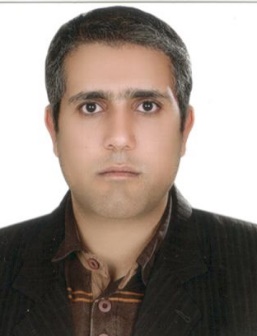
Portrait of Karim Rahimian

I started in 2010 writing accounting software in C# for small businesses in Esfahan, spent the next decade in backend engineering, and in 2017 turned toward bioinformatics: fMRI, gene expression, protein classification — and then the genomics of a pandemic.

My M.Sc. in Bioinformatics at Tarbiat Modares University (2022, first-class honours) centred on machine learning for biological data: gene-expression analysis and detecting autism from fMRI scans in the ABIDE dataset. Out of that period came SARS2Mutant, a database that tracks every amino-acid substitution in SARS-CoV-2 across millions of GISAID sequences, and a run of papers on how the virus mutated continent by continent.

Today I work on infrastructure automation and database performance at Irancell Labs, keep publishing with the mutation group whose atlases I helped build, and teach programming and databases on YouTube in Persian and English.

FocusGenomics · ML · backend systems
EducationM.Sc. Bioinformatics · B.Sc. Computer Science
LanguagesPersian (native) · English (fluent)
Works withRemote teams in Iran, India and the UK
Work experience

Sixteen years,
five chapters

Desktop accounting software, then medical-imaging AI, telecom microservices and infrastructure automation. The bar chart is to scale — every role plotted on the same sixteen-year axis.

Jan 2025 — presentTehran · remote

Irancell Labs

Software engineer · infrastructure & data automation

  • Automation of infrastructure and data workflows
  • Oracle database optimisation and monitoring
  • Server monitoring and system-reliability improvements
  • Python tooling for data-processing tasks
OutcomeCut manual data processing by 40% with automation scripts and a "starter pack" application; optimised Oracle queries, trimming heavy-task runtime by 30%.
PythonOracleLinuxAutomation

Jul 2023 — Jan 2025Bangalore · remote

Tecnotree

Backend developer · Java microservices

  • Backend services in Java and Node.js for a telecom BSS platform
  • Microservices on MongoDB, Kafka, Redis and Rancher
  • API development and performance work
  • Python application automating recurring team tasks
OutcomeRefactored the Integration Microservice that other services depend on.
JavaSpringNode.jsMongoDBKafkaDocker

Sep 2020 — Jul 2023London · remote

IAG Corporation

Python developer & researcher · medical imaging

  • Deep learning and image analysis (CNNs) on radiology and histopathology scans uploaded from clinics across Europe
  • ML deployment on Google Cloud (Compute Engine, buckets)
  • C++ tool to chunk gigapixel histopathology images; a parallel service running AI tasks on the chunks
  • PostgreSQL, Kafka, Docker, Git
OutcomeBuilt a new FastAPI microservice that uploads and manages pathology images, and sped up the lead-tools upload path.
PythonFastAPIDjangoTensorFlowGCPC++

Nov 2017 — Feb 2020Tehran · on site

Codecool Institute

Bioinformatics researcher · machine learning

  • Research on fMRI for neurological disorders; a novel wavelet-based feature-extraction method for fMRI
  • Brain atlases (AAL) for neuroimaging analysis; protein feature extraction
  • Models in scikit-learn and TensorFlow, API development, SQL optimisation
OutcomePrediction models that improved on the baselines, and the groundwork for the autism-from-fMRI thesis.
Pythonscikit-learnTensorFlowfMRI

Jun 2010 — Aug 2017Esfahan · on site

Ghoghnos Corporation

C# developer · accounting products for small businesses

  • Windows applications in C# (WPF, WinForms) with SQL Server backends
  • Backend work in C# and Java; system maintenance and feature upgrades
  • Testing, debugging and front-to-back integration
OutcomeDeveloped and maintained two enterprise applications used daily by the organisation's teams.
C#WPFSQL ServerJava

Research & publications

How a virus
changed, by position

Most of my research sits in one question: as SARS-CoV-2 spread, which amino acids changed, where, and what it meant for diagnostics and vaccines. The rest is machine learning on proteins, brains and cells.

360citations
7h-index
6i10-index
27works indexed
Google Scholar · November 2026Open profile →

Citations per year

Counting since the first SARS-CoV-2 papers appeared.

2026 is year-to-dateSource: Google Scholar

All publications and preprints (22)
  1. 2026Revolutionizing stem cell sorting with machine learning: a review of trends, tools, and future directionsIranian Journal of Medical Sciences 51(5)1 cite
  2. 2026Investigation of SARS-CoV-2 variants at primer binding sites in diagnostic platforms and the effect on laboratory diagnostic samplesMardani, Rahimian, Mahmanzar, Karimi, Saadatpour, Arefian—
  3. 2025Spatial transcriptomics and single-cell RNA-seq reveal cellular heterogeneity of SARS-CoV-2 in lung tissues and global mutational patterns in COVID-19 patientsJournal of Medical Virology 97(9), e705861 cite
  4. 2025Artificial intelligence in metalloprotein binding site prediction: a systematic review bridging bioinformatics and biotechnologyInternational Journal of Biological Macromolecules, 1466669 cites
  5. 2025Intersecting SARS-CoV-2 spike mutations and global vaccine efficacy against COVID-19Frontiers in Immunology 16, 14358734 cites
  6. 2024Comparative atlas of SARS-CoV-2 substitution mutations: a focus on Iranian strains amidst global trendsViruses 16(8), 13313 cites
  7. 2024The geographical distribution of global biobanksCell Journal (Yakhteh) 26(9), 523–5292 cites
  8. 2023SARS2Mutant: SARS-CoV-2 amino-acid mutation atlas databaseNAR Genomics and Bioinformatics 5(2), lqad037 · first author14 cites
  9. 2023Global landscape of SARS-CoV-2 mutations and conserved regionsJournal of Translational Medicine 21, 152152 cites
  10. 2023SARS-CoV-2 non-structural protein 1 (NSP1) mutation virulence and natural selection: evolutionary trends in the six continentsVirus Research 323, 199016 (preprint: bioRxiv 2022)27 cites
  11. 2023Mutation accumulation of SARS-CoV-2 genome in North America, South America, and Oceania: analysis of over 6.5 million sequence samples from GISAIDMoshiri, Mahmanzar, Mahdavi, Tokhanbigli, Rahimian et al.1 cite
  12. 2023Stem cell sorting methods based on machine learning algorithmsAuthorea preprint—
  13. 2022Mutations in SARS-CoV-2 structural proteins: a global analysisVirology Journal 19, 22089 cites
  14. 2022In silico analysis of the substitution mutations and evolutionary trends of the SARS-CoV-2 structural proteins in AsiaIranian Journal of Basic Medical Sciences 25(11), 12996 cites
  15. 2022SARS-CoV-2 NSP3, NSP4 and NSP6 mutations and epistasis during the pandemic in the world: evolutionary trends and natural selections in six continentsmedRxiv16 cites
  16. 2022The first geographic identification by country of sustainable mutations of SARS-CoV-2 sequence samples: worldwide natural selection trendsbioRxiv4 cites
  17. 2022Investigating the mutations in the SARS-CoV-2 proteins among European countriesbioRxiv2 cites
  18. 2022Mutational insights among the structural proteins of SARS-CoV-2: frequencies and evolutionary trends in American countriesbioRxiv1 cite
  19. 2022Analysis of whole-genome sequencing of SARS-CoV-2 reveals recurrent mutations among Iranian patientsmedRxiv1 cite
  20. 2021Moonlighting protein prediction using physico-chemical and evolutional properties via machine learning methodsBMC Bioinformatics 22, 26119 cites
  21. 2021SARS-CoV-2 NSP-12 mutations survey during the pandemic in the worldMazhari, Alavifard, Rahimian, Karimi, Mahmanzar et al.6 cites
  22. 2021A prediction model for COVID-19 prevalence based on demographic and healthcare parameters in IranmedRxiv1 cite
  23. 2019Proposing a localized relevance vector machine for pattern classificationarXiv:1904.03688 — Rismanchian, Rahimian1 cite

Projects & code

Things I built
and kept running

Research code, teaching material and one production database that outlived the pandemic. Everything public lives on GitHub.

Flagship · 2021 → today

SARS2Mutant.com

A web platform that tracks and visualises every amino-acid substitution in SARS-CoV-2. It ingests genomic data from GISAID, maps each change onto the viral proteins, and lets researchers and the public watch variants emerge and spread, country by country.

Python and Django on PostgreSQL, with the analysis pipeline behind the group's mutation papers. Published as a database paper in NAR Genomics and Bioinformatics.

All 23 repositories on GitHub →

Teaching · YouTube

Explaining it
until it's obvious

More than a hundred short lessons on Python, MySQL, data structures, data mining and building a biological database with Django — in Persian, with English titles, for students who learn best by watching someone solve the problem.

Skills

Two toolboxes,
one workbench

Biology problems on one side, production engineering on the other. The useful work happens where they meet: pipelines that are both scientifically right and operationally boring.

Bioinformatics

From raw reads and scans to features a model can learn from.

Gene expression · RNA-seqHISAT2FastQCVariant callingSingle-cell · Drop-seqfMRI · FSL · 3D SlicerAAL brain atlasProtein classificationPhylogeneticsCytoscape · graph analysisGISAID data

Machine learning

Classical methods when they win, deep learning when the data earns it.

scikit-learnTensorFlowCNNsAutoencodersSVM · Random Forest · CatBoostKNN · MLP · Decision treesK-means · hierarchical · DBSCANPCA · UMAP · t-SNEStatisticsImage analysis

Languages & frameworks

Backend-first, with enough frontend to ship the whole thing.

Python · Django · Flask · FastAPIpandas · NumPyJava · Spring Boot · HibernateC# · WPF · ASP.NET Core · EFC++RMATLABNode.jsJavaScript · HTML · CSSBootstrap · React (basic)

Data & infrastructure

Databases tuned, services containerised, servers watched.

PostgreSQLMySQLOracleSQL ServerMongoDBRedisKafkaDocker · RancherGoogle Cloud · GCEAWSLinuxGitNetworking · CCNA · Network+

Honours & awards

Recognition

  • Electronic Content Production Festival — awardNational festival for digital educational content.2007
  • First-class degree (A), M.Sc. BioinformaticsTarbiat Modares University — 18.13 / 20.2022
  • 360 citations · h-index 7Across 27 indexed works, most of them from the SARS-CoV-2 mutation series.Google Scholar · 2026

Education

Degrees

  • M.Sc. BioinformaticsTarbiat Modares University, Tehran. Thesis on machine learning for gene-expression data and autism detection from fMRI (ABIDE).2022 · 18.13 / 20 · first class
  • B.Sc. Computer ScienceShahid Bahonar Technical and Engineering College.2008 · 16.13 / 20
  • High-school diploma, ComputerShahid Yavari High School.2003 · 17.34 / 20

Off the keyboard

Coach.
Player.

Basketball has been part of my week for as long as code has.

I play, and I coach: running drills, building game plans, and getting a group of people to move as one unit. It is the same loop as research and engineering — measure, adjust, repeat — only faster, louder, and with an actual scoreboard.

Coaching is also where I learned to teach: break a motion into steps, show it slowly, let people fail safely, then speed it up. That is exactly how the YouTube lessons are built.

SantoorReadingTravelFriends & family

Contact

Let's build
something

Research collaborations, backend or ML engineering roles, and teaching projects. Email is the fastest way to reach me.

karim.rahimian@gmail.com